




What Is a PWOM? Polar Water Operational Manual, Requirements & 2026 Updates

31.10.2026
A shipping company is preparing to send a vessel to the Arctic or Antarctic. The intended route has been identified, seasonal conditions are being reviewed, and the operator is assessing the vessel’s capabilities, available icebreaker support and applicable flag State requirements.
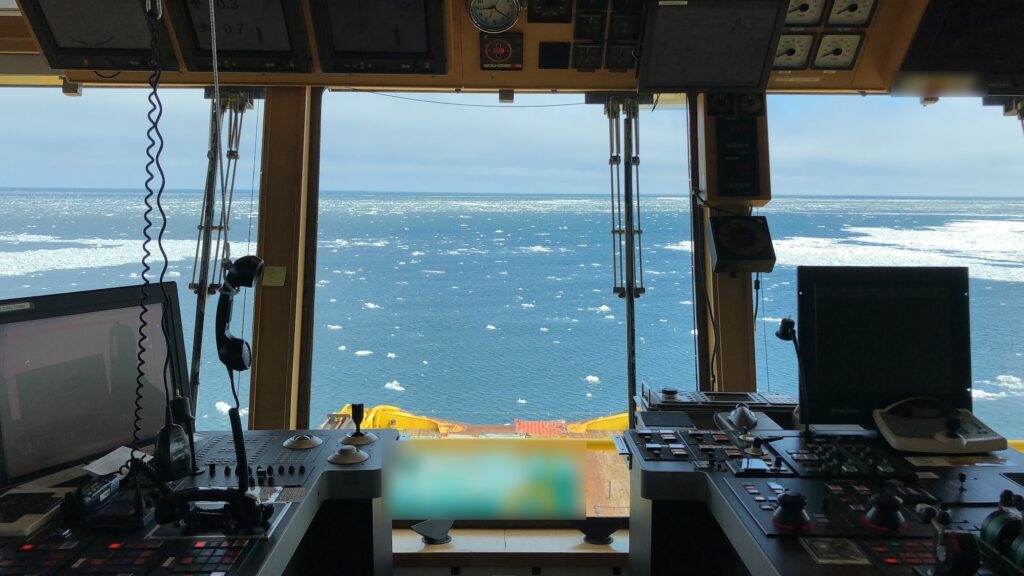
Before the voyage begins, however, several important questions must be addressed.
Is the vessel suitable for the intended operating area? What environmental limitations apply? How should the Master respond if the vessel encounters ice beyond its assessed capabilities? Will essential machinery and safety equipment remain operational at the temperatures expected during the voyage?
These questions should be addressed before the vessel enters polar waters, rather than when an operational problem has already developed.
One of the principal documents supporting this preparation is the Polar Water Operational Manual (PWOM).
Required under the International Maritime Organization’s (IMO) Polar Code for ships within its relevant scope, the PWOM provides vessel-specific information on operational capabilities, limitations and procedures for navigating in polar waters.
Unlike a generic ice navigation guide, a PWOM must be based on the characteristics of the individual vessel and an assessment of the hazards associated with its intended operations.
The document must also remain relevant throughout the vessel’s operational life. Changes in equipment, operating area, environmental conditions or regulatory requirements may justify a review and revision of existing procedures.
With amendments to the Polar Code entering into force on 1 January 2026, understanding which ships are subject to the requirements, how the PWOM is developed and when it needs to be updated has become increasingly important.
This article explains the regulatory framework, practical contents and risk-based approach to developing and maintaining an effective PWOM.
What Is a Polar Water Operational Manual (PWOM)?
A Polar Water Operational Manual (PWOM) is a vessel-specific operational document describing the capabilities, limitations and procedures necessary for safe operations in polar waters.
The requirement is established in Chapter 2, Part I-A of the International Code for Ships Operating in Polar Waters (Polar Code).
Under paragraph 2.1 of the Code, the purpose of the PWOM is to provide the shipowner, operator, Master and crew with sufficient information regarding the ship’s operational capabilities and limitations to support their decision-making.
The PWOM must reflect the vessel’s actual characteristics, including its design, equipment, certification, operating limitations and intended environmental conditions.
Two vessels may hold similar ice-class notations but have different propulsion arrangements, winterization capabilities, navigation equipment or endurance.
Consequently, their operational limitations and procedures may differ considerably.
The PWOM is not intended to replace the vessel’s Safety Management System (SMS). Instead, it supplements existing shipboard documentation by addressing the specific hazards and operational requirements associated with polar navigation.
Polar Waters vs Ice-Covered Waters: What Is the Difference?
A common misconception is that the Polar Code applies wherever a vessel encounters ice.
In reality, the geographical application of the Polar Code is determined independently of the actual presence of sea ice.
Polar Waters are geographically defined areas established under the applicable provisions of SOLAS, MARPOL and the Polar Code.
Ice may be present both inside and outside those areas.
Where Does the Polar Code Apply?
In Antarctica, the geographical definition is straightforward.
The Antarctic Area comprises the sea area south of latitude 60° South.
In the Arctic, the boundary is considerably more complex. It follows the coordinates and geographical features specified in SOLAS Chapter XIV, Regulation 1.
The Arctic boundary does not coincide with the Arctic Circle and cannot be represented accurately by a single parallel of latitude.
For example:
- The Baltic Sea and North Sea are outside the Polar Code’s defined geographical area.
- Iceland and its surrounding waters are not automatically within the Arctic waters defined by the Code.
- The boundary crosses parts of the Norwegian and Barents Sea region.
- Routes near Svalbard and Jan Mayen must be assessed against the official geographical coordinates rather than the general name of the region.
Determining whether a particular route enters Polar Code waters requires reference to the applicable SOLAS definitions and official IMO geographical charts.
Reference: IMO Polar Code — Resolution MSC.385(94), Figures 1 and 2
Does a Ship Need a PWOM for Winter Navigation in the Baltic Sea?
Not solely because it operates in ice.
The Baltic Sea is outside the geographical application of the Polar Code.
A vessel navigating through ice in the Gulf of Bothnia or Gulf of Finland is therefore not automatically required to carry a PWOM under the Polar Code.
However, other requirements may apply, including national winter navigation regulations, ice-class restrictions and conditions for icebreaker assistance.
For example, the Finnish-Swedish Ice Class Rules (FSICR) are used extensively in the Baltic region.
The reverse situation is also possible.
A SOLAS vessel may undertake a summer voyage to Antarctica along a predominantly ice-free route while remaining subject to the applicable requirements of the Polar Code.
The geographical application of the Code does not change according to seasonal ice coverage.
Ice-Free Waters, Open Water and Bergy Waters
The Polar Code also distinguishes between several environmental conditions.
| Term | Meaning |
|---|---|
| Polar Waters | The geographically defined Arctic waters and Antarctic area covered by the Code |
| Ice-Free Waters | Waters in which no ice is present |
| Open Water | A large area of freely navigable water with sea-ice concentration below 1/10 and no ice of land origin |
| Bergy Waters | Freely navigable waters containing ice of land origin in concentrations up to 1/10 |
The expression ice-covered waters may be used descriptively, but it should not be confused with the legally defined geographical term Polar Waters.
Both considerations are important when preparing a polar voyage: whether the route falls within the Code’s geographical limits and what ice conditions the vessel may actually encounter.
Which Ships Are Required to Carry a PWOM?
A PWOM is mandatory for ships falling within the relevant safety provisions of SOLAS Chapter XIV and Part I-A of the Polar Code.
In general, these include passenger ships and cargo ships of 500 gross tonnage (GT) and above that are certified under SOLAS Chapter I and operate in defined polar waters.
Such vessels must comply with the relevant Polar Code requirements and carry a Polar Ship Certificate.
However, applicability should not be determined from gross tonnage alone. The vessel’s type, certification, flag State, intended service and applicable exemptions must also be considered.
Polar Code Categories A, B and C
The Polar Code establishes three categories of ships.
| Category | Intended operating conditions |
|---|---|
| Category A | Operation in at least medium first-year ice, which may include old ice inclusions |
| Category B | Operation in at least thin first-year ice, which may include old ice inclusions |
| Category C | Operation in open water or ice conditions less severe than those included in Categories A and B |
These categories do not provide an automatic indication of the maximum ice thickness through which a particular vessel can safely navigate.
Polar Classes PC1–PC7 and Baltic Ice Classes
Three distinct concepts must be understood:
- The vessel’s Polar Code Category — A, B or C.
- Its classification society ice-class notation.
- Its assessed operational capabilities and limitations.
These concepts are related but are not interchangeable.
The International Association of Classification Societies (IACS) defines seven Polar Classes, ranging from PC1 to PC7.
| Polar Class | General description |
|---|---|
| PC1 | Year-round operation in all polar waters |
| PC2 | Year-round operation in moderate multi-year ice conditions |
| PC3 | Year-round operation in second-year ice, which may include multi-year ice inclusions |
| PC4 | Year-round operation in thick first-year ice, which may include old ice inclusions |
| PC5 | Year-round operation in medium first-year ice, which may include old ice inclusions |
| PC6 | Summer/autumn operation in medium first-year ice, which may include old ice inclusions |
| PC7 | Summer/autumn operation in thin first-year ice, which may include old ice inclusions |
These are general descriptions of the classes, not unconditional operating permissions.
Can a Baltic Ice-Class Vessel Operate in Polar Waters?
Potentially, yes, provided its compliance with the applicable requirements and operational limitations can be demonstrated.
However, holding a Baltic ice-class notation such as 1A or 1A Super does not automatically establish a particular Polar Code category or authorize unrestricted polar operations.
Baltic ice-class rules and IACS Polar Class requirements were developed around different design and operational assumptions.
An assessment may therefore be required to establish whether the vessel’s existing structural capabilities, machinery and equipment are suitable for the intended environment.
Depending on the outcome, the ship may be restricted to open-water operations, require additional equipment or be subject to specific operating limitations.
The resulting limitations must be reflected in the relevant certification and PWOM.
Polar Ship Certificate: What Does It Confirm?
The Polar Ship Certificate is the statutory document confirming that a vessel satisfies the applicable safety requirements of the Polar Code.
Its prescribed form is provided in Appendix I of the Polar Code.
The certificate includes information such as:
- Polar Code Category A, B or C.
- Ice class and applicable ice-strengthened draught range.
- Permitted ice conditions.
- Whether the vessel is intended to operate in low air temperatures.
- Polar Service Temperature (PST), where applicable.
- Maximum Expected Time of Rescue (METR).
- Operational limitations relevant to the vessel.
What Are PST and METR?
Polar Service Temperature (PST) is the temperature established for a ship intended to operate in low air temperatures.
For applicable ships, the PST must be at least 10°C below the lowest Mean Daily Low Temperature (MDLT) for the intended operating area and season.
For example, if the relevant lowest MDLT is −20°C, the PST must be −30°C or lower.
Maximum Expected Time of Rescue (METR) is the maximum expected time of rescue used when determining the design requirements for survival-support equipment and systems.
Under the Polar Code, METR must never be less than five days.
This does not mean that rescue is guaranteed within five days.
Nor should METR be confused with the vessel’s normal operational endurance based on fuel, fresh water, provisions or other consumables.
How Is the PWOM Reviewed During Certification?
The Polar Ship Certificate is issued by the flag State Administration or a duly authorized recognized organization following the applicable survey and certification procedures.
Compliance assessment includes the relevant technical and operational requirements, the results of the Operational Assessment and the necessary documentation.
The PWOM must be consistent with the vessel’s assessed capabilities and the limitations recorded in its certificate.
For certain Category C cargo ships, paragraph 1.3.3 of the Polar Code provides a specific documentation-based certification arrangement, subject to its conditions and the required subsequent onboard survey.
The exact review, acceptance and approval arrangements depend on the flag State and the recognized organization.
It should not be assumed that every PWOM receives an identical, separately issued classification society approval.
During Port State Control (PSC) inspections, the vessel’s certificates, PWOM and compliance with applicable requirements may also be examined.
What Does Chapter 2 of the Polar Code Actually Require?
The principal mandatory requirements are established in paragraphs 2.2 and 2.3 of Part I-A.
These provisions are more important than simply following a generic manual template.
1. Ship Capabilities and Limitations
The PWOM must contain information on the ship’s capabilities and limitations as determined through the assessment required under paragraph 1.5.
Where applicable, it must identify the methodology used to assess operational capabilities and limitations in ice.
2. Normal Operations
Paragraph 2.3.3 requires risk-based procedures addressing:
- Voyage planning to avoid ice or temperatures exceeding the vessel’s design capabilities or operational limitations.
- Arrangements for receiving environmental forecasts.
- Limitations of available hydrographic, meteorological and navigational information.
- Operation of equipment required under other chapters of the Code.
- Special measures needed to maintain equipment and system functionality in low temperatures, topside icing and sea ice.
3. Emergency Response
Paragraph 2.3.4 requires applicable risk-based procedures for contacting emergency response providers, including search and rescue, salvage and pollution-response services.
For ships ice-strengthened in accordance with Chapter 3, procedures must also address maintaining life support and ship integrity during prolonged entrapment by ice.
4. Conditions Exceeding Ship Capabilities
Under paragraph 2.3.5, the PWOM must provide procedures for measures to be taken when ice or temperature conditions exceed the ship’s design capabilities or operational limitations.
5. Ice Operations and Icebreaker Assistance
Paragraph 2.3.6 addresses procedures for monitoring and maintaining safety during operations in ice, including icebreaker escort or assistance where applicable.
Different limitations may apply during independent navigation and escorted operations.
Where relevant, the PWOM should distinguish between these operating arrangements.
These requirements explain why a PWOM must contain practical operating guidance rather than generic descriptions of polar hazards.
Why PWOM Development Starts With a Risk Assessment
The Polar Code follows a risk-based approach to safety.
Under paragraph 1.5 of Part I-A, an Operational Assessment must be conducted to establish appropriate operating procedures and limitations.
This assessment considers the anticipated operating conditions, the ship’s capabilities, identified polar hazards and any additional risks relevant to the intended operation.
A professionally developed PWOM should demonstrate a clear relationship between:
Identified hazards → Risk assessment → Risk-control measures → Operational limitations and procedures → PWOM content
The objective is not merely to list potential hazards.
The assessment must establish how relevant risks are eliminated, reduced or controlled and identify any remaining limitations.
Practical Example: Sea-Water Cooling System
Consider a vessel preparing to operate in low-temperature conditions where freezing and slush ice could interfere with its sea-water cooling arrangements.
The risk assessment might identify restricted sea-water flow as a potential cause of machinery overheating or loss of essential services.
Simply inserting a sentence requiring the engineers to monitor the cooling system would not be sufficient.
A useful PWOM must relate the hazard to the vessel’s actual system configuration, protective arrangements and approved operating procedures.
| Assessment element | Vessel-specific considerations |
|---|---|
| Hazard | Ice or slush accumulation restricting sea-water flow |
| Potential consequences | Insufficient cooling, machinery malfunction, loss or restriction of propulsion or auxiliary systems |
| Risk controls | Verified protective arrangements, manufacturer-approved operating configurations, pressure and temperature monitoring |
| PWOM procedure | Pre-operation checks, monitoring responsibilities, operating limitations and actions on detection of abnormal conditions |
| Exceeding limitations | Approved corrective actions, load restrictions or changes in operating mode, as applicable |
For the procedure to be technically defensible, its assumptions should be supported by relevant documentation.
Such evidence may include approved drawings, technical specifications, manufacturer instructions, equipment test results and existing operating procedures.
Measures developed for one vessel must not be copied into another vessel’s manual without confirming their applicability.
ICS and OCIMF Guidance on PWOM Development
The International Chamber of Shipping (ICS) and the Oil Companies International Marine Forum (OCIMF) have published dedicated guidance entitled Guidelines for the Development of a Polar Water Operational Manual.
The guidance provides additional practical detail beyond the model table of contents contained in Appendix II of the Polar Code.
It recommends basing PWOM development on an Operational Assessment and including the assessment in an appendix to establish traceability between hazards, limitations and operating procedures.
This is a valuable approach to document quality.
However, industry recommendations must be distinguished from mandatory IMO requirements and flag State approval arrangements.
POLARIS: How Are Operational Limitations in Ice Assessed?
One recognized methodology is the Polar Operational Limit Assessment Risk Indexing System (POLARIS).
It is described in IMO MSC.1/Circ.1519 — Guidance on Methodologies for Assessing Operational Capabilities and Limitations in Ice.
POLARIS provides a structured approach to assessing a ship’s operational limitations under different ice regimes.
The methodology assigns Risk Index Values (RIVs) according to the vessel’s ice class and the types of ice present.
These values are combined with the concentration of each ice type to calculate a Risk Index Outcome (RIO).
The basic formula is:
RIO = Σ (Cᵢ × RIVᵢ)
Where:
- Cᵢ represents the concentration of a particular ice type, expressed in tenths.
- RIVᵢ is the corresponding Risk Index Value for that ice type and vessel class.
For example, if an ice regime contains 6/10 of one ice type and 4/10 of another, the corresponding RIVs are multiplied by 6 and 4 respectively, and the results are added together.
The calculated RIO is then interpreted according to the vessel’s ice-class category and the methodology’s operating criteria.
Understanding RIO Results
For independent operations, MSC.1/Circ.1519 distinguishes the following:
| RIO | Polar Class PC1–PC7 | Below PC7 or no ice class |
|---|---|---|
| RIO ≥ 0 | Normal operation | Normal operation |
| −10 ≤ RIO < 0 | Elevated operational risk | Operation subject to special consideration |
| RIO < −10 | Operation subject to special consideration | Operation subject to special consideration |
For elevated-risk operations, the guidance describes additional measures, including recommended speed limits, increased watchkeeping and possible icebreaker assistance.
The appropriate measures depend on the vessel, applicable methodology and actual conditions.
POLARIS is a decision-support methodology, not an automatic go/no-go authorization.
The Master must still consider the vessel’s condition, weather, visibility, ice pressure, manoeuvrability and other operational factors.
The PWOM should therefore identify how the methodology is used, the source of relevant information, the personnel responsible for assessing it and the actions required under the different outcomes.
What Operational Procedures Should a PWOM Include?
Appendix II of the Polar Code provides a model table of contents for the PWOM.
The actual content must be adapted to the vessel and its intended operations.
Several areas deserve particular attention.
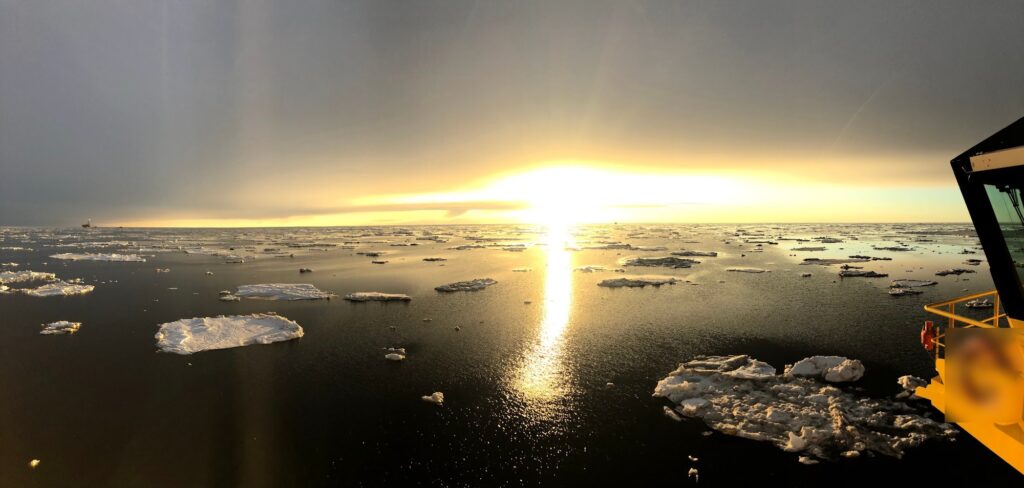
Polar Voyage Planning
The PWOM should establish procedures for obtaining and assessing ice and weather information, identifying navigation hazards, considering alternative routes and evaluating the availability of external assistance.
A PWOM is not a substitute for a voyage-specific passage plan.
Instead, it establishes the capabilities, limitations and procedures that must be applied when preparing and executing that plan.
Low-Temperature Operations and Winterization
Low temperatures can affect numerous shipboard systems, including sea-water intakes, piping, hydraulics, electrical equipment, ventilation, fire protection and lifesaving appliances.
The PWOM should identify relevant vulnerabilities and document the measures necessary to maintain equipment functionality.
These procedures must correspond to the vessel’s actual equipment and manufacturer-approved operating limits.
High-Latitude Navigation and Communications
Navigation and communication equipment may experience limitations at high latitudes.
The PWOM should address applicable equipment restrictions, the reliability of position and heading information, and contingency procedures for failures or reduced system performance.
The presence of multiple navigation systems does not automatically guarantee equivalent performance throughout every intended operating area.
Topside Icing and Stability
Ice accumulation on exposed decks, equipment and superstructures can increase weight and adversely affect vessel stability.
Applicable procedures should address ice accumulation monitoring, operating restrictions and safe measures to control or remove ice.
These procedures must be consistent with the vessel’s approved stability documentation.
Emergency Preparedness and Survival
Polar operations may take place far from established search-and-rescue infrastructure.
Emergency planning must therefore consider communication arrangements, available rescue resources, environmental conditions and the potential need for extended survival support.
The PWOM should reference or contain the relevant emergency procedures.
Icebreaker Escort
When icebreaker assistance is anticipated, the PWOM should address communication arrangements, operational responsibilities, monitoring of ice conditions and the vessel’s limitations.
Icebreaker support does not eliminate the need to assess the capabilities of the escorted vessel.
Crew Training: STCW Regulation V/4
A properly developed PWOM must be supported by appropriately qualified and familiarized personnel.
For ships subject to the relevant Polar Code provisions, deck-officer training requirements are established through Chapter 12 of the Polar Code and STCW Regulation V/4.
The associated training standards are set out in the STCW Code.
Importantly, the required training depends on the expected ice conditions and the type of vessel.
Minimum Polar Training Requirements
Under the training matrix in Polar Code paragraph 12.3.1:
| Ice conditions | Tankers and passenger ships | Other ships |
|---|---|---|
| Ice-Free Waters | No additional polar training under this matrix | No additional polar training under this matrix |
| Open Water | Basic Training for the Master, Chief Mate and Officers in Charge of a Navigational Watch | No additional polar training under this matrix |
| Other Waters | Advanced Training for the Master and Chief Mate; Basic Training for Officers in Charge of a Navigational Watch | Advanced Training for the Master and Chief Mate; Basic Training for Officers in Charge of a Navigational Watch |
The Code also provides conditional arrangements under paragraph 12.3.2 for the use of suitably qualified personnel to satisfy certain training requirements.
Such arrangements must meet the prescribed conditions and applicable Administration requirements.
They do not remove the Master’s or watchkeeping officers’ responsibilities.
What Does Polar Training Cover?
Depending on the training level, relevant competencies include:
- Interpretation of ice charts and identification of ice conditions.
- Voyage planning and route selection in ice.
- Ship handling and manoeuvring in ice.
- Operational limitations of navigation equipment.
- Icebreaker communications and escort procedures.
- Anchoring and mooring considerations in ice.
- Hazards associated with low temperatures.
- Emergency response and survival in polar environments.
In addition, Polar Code paragraph 12.3.4 requires every crew member to be familiar with the procedures and equipment contained in or referenced by the PWOM that are relevant to their assigned duties.
This requirement extends beyond the officers who must hold specific polar training qualifications.
Consequently, the company must ensure that the manual is not only available on board but that applicable procedures are understood by the personnel expected to use them.
Environmental Requirements: MARPOL, the Polar Code and HFO Restrictions
The Polar Code addresses both maritime safety and pollution prevention.
Environmental provisions are contained in Part II-A, operating alongside the relevant MARPOL Annexes.
These provisions address pollution prevention relating to oil, noxious liquid substances, sewage and garbage.
Depending on the substance and circumstances, discharges may be prohibited or permitted only under specific restrictions.
The relevant requirements should be reflected in the vessel’s environmental procedures and associated controlled documentation.
A PWOM does not replace compliance with MARPOL or the vessel’s statutory pollution-prevention arrangements.
Heavy Fuel Oil Restrictions in Arctic Waters
MARPOL Annex I, Regulation 43A establishes restrictions on the use and carriage for use as fuel of certain heavy fuel oils (HFO) in Arctic waters.
The prohibition took effect on 1 July 2024, subject to specified exceptions and transitional provisions.
For vessels meeting particular requirements concerning fuel-tank protection, the application date is 1 July 2029.
Temporary waivers are also permitted under prescribed conditions for ships flying the flag of an Arctic coastal State and operating within waters under that State’s sovereignty or jurisdiction. Such waivers cease to apply from 1 July 2029.
Ships engaged in certain safety, search-and-rescue and oil-spill response activities are subject to specific exceptions.
Antarctic restrictions on heavy-grade oils have been in force for considerably longer under MARPOL Annex I, Regulation 43.
Before planning a polar voyage, the operator should verify the fuel characteristics, applicable restrictions, bunker arrangements and environmental compliance requirements.
Additional Considerations for Tankers and Cargo Ships
Although the Polar Code establishes common principles, the operational risk assessment must consider the specific equipment and activities of the vessel.
Tankers
For tankers, low-temperature operations may introduce additional concerns involving cargo tank venting systems, pressure monitoring equipment, cargo piping, cargo heating arrangements and deck machinery.
For example, ice accumulation or freezing in parts of a cargo tank venting system could interfere with its intended function.
The risk assessment should determine whether the anticipated environmental conditions create an unacceptable risk and identify appropriate preventive or operational measures.
General Cargo Ships and Bulk Carriers
For dry cargo vessels, particular consideration may be required for hatch covers, ballast systems, hold ventilation, bilge arrangements, deck equipment and cargo handling activities in low temperatures.
Not every resulting procedure needs to be reproduced in full within the PWOM.
Relevant controls may already exist in the Cargo Operations Manual, SMS, stability documentation or equipment instructions.
The important point is to ensure that identified risks are addressed and that the applicable documents remain consistent.
Polar Code 2026 Updates: What Actually Changed?
On 1 January 2026, amendments to SOLAS Chapter XIV and the Polar Code entered into force through IMO Resolutions MSC.532(107) and MSC.538(107).
These amendments extended specific navigation-safety and voyage-planning requirements to additional categories of vessels.
Newly Covered Vessel Categories
| Vessel category | Applicability threshold |
|---|---|
| Fishing vessels | 24 metres length overall and above |
| Pleasure yachts not engaged in trade | 300 GT and above |
| Cargo ships | 300 GT and above but below 500 GT |
Two new chapters were introduced:
Chapter 9-1 — Safety of Navigation
Chapter 11-1 — Voyage Planning
The existing Chapters 9 and 11 continue to apply to ships certified in accordance with SOLAS Chapter I.
The new Chapters 9-1 and 11-1 provide corresponding requirements specifically for the additional vessel categories.
They do not replace the existing chapters for conventional SOLAS ships.
Geographical Application of the 2026 Amendments
The new SOLAS Regulation XIV/3-1 applies to relevant vessels undertaking:
- Voyages in the Antarctic area.
- Voyages in Arctic waters beyond the outer limit of the territorial sea of the Contracting Government whose flag the vessel is entitled to fly.
This distinction is important when assessing the requirements for a particular voyage.
The provisions must be considered together with the vessel’s flag State requirements and the scope of any permitted exceptions.
Administrations also determine the extent to which certain requirements of paragraphs 9-1.3.1 and 9-1.3.2 do not apply to specified fishing vessels and vessels of 300 GT or more but less than 500 GT not engaged on international voyages.
Compliance Dates
The amendments entered into force on 1 January 2026.
Relevant vessels constructed on or after that date must meet the applicable requirements when operating within the scope of the amendments.
For relevant vessels constructed before 1 January 2026, compliance with the new Chapters 9-1 and 11-1 is required no later than 1 January 2027.
This is a fixed compliance date, not automatically the date of the vessel’s next intermediate or renewal survey.
What Do the New Requirements Cover?
The additional provisions include:
- Receiving and displaying current ice information.
- Maintaining navigation equipment functionality under expected environmental conditions.
- Suitable heading-reference and position-fixing arrangements.
- Visual detection of ice during darkness.
- Protection of relevant navigation and communication antennas against ice accumulation.
- Specific echo-sounding arrangements for applicable newly constructed ice-strengthened vessels.
- Voyage planning that accounts for polar hazards and available information.
Chapter 11-1 also requires appropriate procedures to support safe polar operations.
Where a vessel is not required to have an SMS, a documented procedure addressing operations in polar waters must be available.
Did the 2026 Amendments Make PWOM Mandatory for All These Ships?
No.
The amendments extend selected requirements concerning safety of navigation and voyage planning.
SOLAS XIV/3-1 applies Chapters 9-1 and 11-1 while taking into account the introduction and the safety-related provisions of paragraphs 1.2, 1.4 and 1.5 of Chapter 1, Part I-A.
The amendments do not automatically impose the full Chapter 2 PWOM requirement and the existing Polar Ship Certificate regime on every newly covered vessel.
Nevertheless, they reinforce the importance of assessing operational capabilities and maintaining documented procedures.
For vessels already required to carry a PWOM, the 2026 amendments do not automatically create an obligation to rewrite the entire manual.
Any necessary revision should be determined by the actual applicability of the amended requirements and their effect on the vessel’s existing documentation.
PWOM for Offshore and DP Vessels: Additional Operational Risks
Although the Polar Code applies to a broad range of vessels, specialized offshore activities may introduce additional operational risks.
Offshore vessels may conduct survey, subsea, construction, supply or other operations requiring prolonged station-keeping.
Some of these activities involve Dynamic Positioning (DP), where maintaining a controlled position and heading is essential to the operation.
In polar environments, the risks may extend beyond those associated with the vessel’s transit.
How Does a PWOM Relate to the DP Operations Manual, FMEA, CAMO and ASOG?
Several documents may be relevant when planning DP operations in polar conditions.
| Document | Primary purpose |
|---|---|
| PWOM | Polar operating capabilities, limitations and relevant procedures |
| DP Operations Manual | Vessel-specific procedures for operating the DP system |
| DP FMEA — Failure Modes and Effects Analysis | Assessment of potential failures and their consequences for the DP system |
| CAMO — Critical Activity Mode of Operation | Required configuration and operational philosophy for critical activities |
| ASOG — Activity Specific Operating Guidelines | Operational states, limits and required actions for a specific activity |
| Ice Management Plan | Monitoring, assessment and management of ice-related threats during an operation |
The documents serve different purposes but may share relevant limitations and operational controls.
Consider several examples.
Icing of meteorological sensors. Ice accumulation on wind sensors may affect the quality of environmental data used by the DP system. Relevant limitations and loss-of-data actions should be considered in the vessel’s DP operating procedures and applicable operational guidance.
Ice interaction with thrusters and cooling systems. Potential ice-related restrictions affecting propulsion or auxiliary systems should be assessed. Where these introduce credible failure scenarios, their treatment in the DP FMEA and related operational documentation should be reviewed.
DP capability calculations. A conventional DP Capability Analysis considers the environmental loads included in its calculation model. If ice-related loads were not evaluated, the results must not be interpreted as evidence that the vessel can maintain position under those loads.
Operational termination criteria. An ASOG may establish operating states and actions when conditions deteriorate. Where ice hazards are relevant, appropriate limits and termination procedures should be consistent with the PWOM and Ice Management Plan.
These examples illustrate areas requiring coordinated technical assessment. They are not universal operating criteria for DP vessels in ice.
The appropriate approach depends on the vessel, DP configuration and intended operations.
Ice Management Plan and ISO 35104
ISO 35104:2018 — Petroleum and Natural Gas Industries — Arctic Operations — Ice Management establishes principles, requirements and guidance for organizing ice management activities.
The standard addresses planning, engineering, implementation, monitoring and documentation.
It is relevant to different types of operations and facilities, including floating drilling vessels, construction activities and other marine operations exposed to ice-related hazards.
An Ice Management Plan is normally developed around the particular project, operating area and activity.
It is therefore not a direct substitute for a vessel-specific PWOM.
However, where both documents apply, their provisions should be coordinated.
Additional industry guidance is provided by OCIMF’s Offshore Vessel Operations in Ice and/or Severe Sub-Zero Temperatures in Arctic and Sub-Arctic Regions.
NautikOne’s Integrated Documentation Approach
NautikOne’s technical documentation experience encompasses DP Operations Manuals, FMEA, CAMO and ASOG.
Understanding how these documents interact with Polar Code requirements supports a more integrated approach to evaluating operational limitations and risk-control measures.
At the same time, specialized DP documentation must be developed and independently reviewed within the competence of the personnel involved and the applicable classification and project requirements.
Why Does a PWOM Need to Be Updated?
The initial development of a PWOM is generally associated with preparation for polar operations and the relevant certification process.
However, the conditions on which the original assessment was based may change.
A vessel may be assigned to a different polar region, undergo machinery modifications, receive new equipment or undertake operations that were not considered in the original documentation.
In such circumstances, the continued suitability of the PWOM should be evaluated.
Example: Moving From Arctic to Antarctic Operations
Consider a vessel that has successfully operated in the Arctic for several seasons.
It has the relevant certification, an existing PWOM and established operating procedures.
The operator subsequently plans to deploy the vessel to Antarctica.
Although the vessel’s technical configuration may remain unchanged, the new operating environment may introduce different hazards and logistical limitations.
Potential differences include:
- Sea-ice conditions and exposure to icebergs.
- Availability and quality of hydrographic information.
- Sources of ice and weather forecasts.
- Communication coverage.
- Search-and-rescue arrangements.
- Availability of ports, shelters and external assistance.
- Environmental restrictions and project-specific requirements.
The existing PWOM should therefore be reviewed against the assumptions used in its original Operational Assessment.
In some cases, targeted revisions to procedures and appendices may be sufficient.
In others, a revised Operational Assessment and more extensive changes may be necessary.
When Should a PWOM Be Reviewed?
A review may be appropriate following:
- A change in intended geographical operating area.
- A change in the operating season or expected environmental conditions.
- Modifications to critical machinery or equipment.
- Changes to confirmed ice or temperature limitations.
- New types of operations or charter requirements.
- Identification of inconsistencies with other controlled documents.
- Relevant regulatory changes.
- Lessons learned from operations, drills, inspections or incidents.
The appropriate scope of revision depends on the significance of the change.
Not every change requires a complete manual rewrite.
The objective is to ensure that the documented capabilities, assumptions, limitations and procedures continue to reflect the vessel’s actual circumstances.
How Is a PWOM Developed or Revised?
A technically defensible process normally includes six stages.
Step 1 — Determine Applicable Requirements
Review the intended voyage, vessel type, certification and applicable provisions of the Polar Code.
Confirm the relevant flag State and recognized organization requirements, including any documentation and approval arrangements.
Step 2 — Review Technical Documentation
Depending on the vessel, relevant inputs may include:
- Classification and statutory certificates.
- Hull and machinery documentation.
- Ice-class details and operating restrictions.
- Stability information.
- Winterization arrangements.
- Manufacturer equipment manuals.
- Existing SMS documentation.
- The current PWOM and previous revisions.
The purpose is to establish a verified technical baseline.
Step 3 — Conduct the Operational Assessment
Identify the expected environmental conditions, relevant hazards and the vessel’s actual capabilities and limitations.
Assess the associated risks and determine the necessary operational or technical controls.
Where existing arrangements are inadequate, additional measures may need to be evaluated.
Step 4 — Develop Vessel-Specific Procedures
Translate the assessment findings into practical procedures.
These should address monitoring, responsibilities, applicable restrictions, preventive measures and actions when conditions exceed established limits.
Step 5 — Verify Document Consistency
Review the PWOM against the Polar Ship Certificate, SMS and other relevant vessel documentation.
Identify outdated references, contradictory requirements or unsubstantiated assumptions.
Step 6 — Issue and Implement the Controlled Revision
Prepare the revised manual, associated appendices and relevant supporting records.
Complete the applicable review and approval processes.
Ensure that the current controlled version is available on board and that the relevant crew members are familiar with its procedures.
Subsequent changes should be assessed through the company’s established document-control and management-of-change processes.
PWOM Development, Review and Updates With NautikOne
NautikOne provides technical documentation support to shipowners and vessel operators preparing for polar operations.
The work may involve developing a new Polar Water Operational Manual or reviewing an existing PWOM before a new voyage, operating-area change or documentation assessment.
Depending on the agreed scope, deliverables may include:
| Deliverable | What the operator receives |
|---|---|
| Applicability Assessment | Review of relevant Polar Code requirements for the vessel and intended operations |
| PWOM Gap Analysis | Documented findings, identified deficiencies and recommended corrective actions |
| Operational Risk Assessment | Assessment of relevant hazards, limitations and risk-control measures |
| PWOM Development or Revision | A new manual or an updated, vessel-specific edition |
| Document Consistency Review | Review of alignment with certificates, SMS and other applicable procedures |
| Revision Summary | Record of significant changes, supporting assumptions and outstanding matters |
The scope of work is determined by the vessel’s characteristics, intended operations and the condition of the existing technical documentation.
For vessels already carrying a PWOM, a Gap Analysis may provide an efficient starting point.
It allows the operator to establish whether a complete redevelopment is necessary or whether targeted revisions can address the identified deficiencies.
NautikOne’s approach emphasizes traceability between operational risks, the vessel’s verified capabilities and the procedures intended to control those risks.
Planning a Voyage to the Arctic or Antarctic?
Whether the vessel requires a new PWOM or a review of its existing manual, early assessment can help identify documentation gaps before mobilization.
Contact NautikOne to discuss Polar Code applicability, PWOM development or revision requirements for your vessel.
Conclusion
The Polar Water Operational Manual is an important component of safe vessel operations in polar waters.
It connects verified technical capabilities, the results of an Operational Assessment, operational limitations and the procedures used by the ship’s crew.
The requirement for a PWOM is determined by the applicable regulatory framework and the geographical boundaries of polar waters, not simply by the presence of sea ice.
Its contents must be based on reliable vessel information and address the measures needed to manage identified risks.
Where significant operating conditions, equipment or limitations change, the manual should be reviewed and revised as appropriate.
The IMO amendments effective from 1 January 2026 extend certain polar-navigation requirements to additional vessel categories but do not change the fundamental principle of safe polar operations:
Operational readiness begins with understanding what a particular vessel can safely do, where its limitations lie and how those limitations will be managed before the voyage begins.
Frequently Asked Questions
What does PWOM stand for?
PWOM stands for Polar Water Operational Manual. It is a vessel-specific manual required by Chapter 2, Part I-A of the Polar Code for ships within the relevant scope.
Is a PWOM required for every ship operating in ice?
No. The Polar Code PWOM requirement depends on the defined geographical area and the applicable vessel category. Ice navigation outside polar waters does not automatically trigger the requirement.
Is a PWOM required for navigation in the Baltic Sea?
Not under the Polar Code solely because the Baltic Sea is ice-covered. The Baltic Sea lies outside the Code’s geographical boundaries, although separate winter navigation regulations may apply.
Does a vessel without an ice-class notation need a PWOM?
It may. A vessel within the applicable Polar Code scope and intended to operate in open water may still require a PWOM. Its procedures may emphasize avoiding ice beyond its capabilities.
Is a Risk Assessment mandatory when developing a PWOM?
Polar Code paragraph 1.5 requires an Operational Assessment to establish the vessel’s operational limitations and procedures. ICS/OCIMF guidance recommends a risk-based approach and documenting the assessment within the PWOM.
Is POLARIS mandatory?
Not universally. POLARIS is a recognized methodology for assessing operational capabilities and limitations in ice. The applicable methodology depends on the vessel, Administration requirements and intended operations.
How often should a PWOM be updated?
The Polar Code does not establish a universal calendar interval for completely rewriting the manual. Its continued suitability should be reviewed when significant changes affect the vessel’s capabilities, operating conditions, risks or procedures.
Can the same PWOM be used for several sister vessels?
A common structure and certain procedures may be reused, but the manual must accurately reflect each vessel’s verified configuration, capabilities and limitations.
Who issues the Polar Ship Certificate?
The certificate is issued by the flag State Administration or a duly authorized recognized organization under the applicable survey and certification arrangements.
Do the 2026 Polar Code amendments require a new PWOM?
Not automatically. The amendments extend specific safety-of-navigation and voyage-planning requirements to additional categories of vessels. Whether an existing PWOM needs to be revised depends on the applicability of the changes and their effect on the vessel’s documentation.
References and Further Reading
1. International Maritime Organization — Polar Code
Official overview of the Code, including its application, safety requirements and environmental protection provisions.
2. IMO Resolution MSC.385(94) — Polar Code Safety Provisions
Primary reference for Part I-A, Chapters 1, 2, 11 and 12, Appendix I (Polar Ship Certificate) and Appendix II (Model Table of Contents for the PWOM).
3. IMO Resolution MSC.538(107) — 2026 Polar Code Amendments
Amendments introducing the additional safety-of-navigation and voyage-planning chapters.
4. UK Maritime and Coastguard Agency — MGN 637 (M), Amendment 1
Regulatory guidance covering Polar Code application, certification, training and the 2026 amendments.
5. ICS / OCIMF — Guidelines for the Development of a Polar Water Operational Manual
Industry guidance for developing vessel-specific PWOMs based on operational assessments.
6. IMO MSC.1/Circ.1519 — Guidance on Methodologies for Assessing Operational Capabilities and Limitations in Ice
Includes the POLARIS methodology and risk-indexing criteria.
7. IMO — Shipping in Polar Waters
Additional information on MARPOL environmental provisions and heavy fuel oil restrictions.
8. ISO 35104:2018 — Arctic Operations — Ice Management
International standard covering ice-management principles, requirements and guidance.
9. OCIMF — Offshore Vessel Operations in Ice and/or Severe Sub-Zero Temperatures in Arctic and Sub-Arctic Regions
Industry guidance for specialized offshore vessel operations.